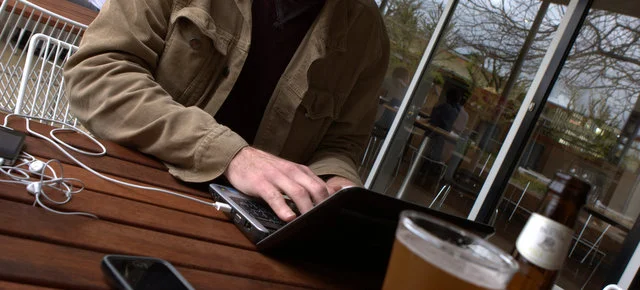
I find myself getting cranky a lot these days. I recently turned forty and I hope my crankiness is not due to getting old, but I can’t think what else it could be. I know that it’s not because I’m turning into a wowser, because the precise reason I’m getting cranky is that I WANT to drink. As I have said often, I love beer. I love to drink it. I want to drink the beers that I love when I want to, where I want to and how I want to.
I don’t want to be made to drink beer in plastic cups, or only before 10pm, or only drink beer with less that 4 per cent alcohol.
I want to drink a beer and not have it labelled with pictures of withered and spotty livers, or pictures of bleeding bodies littered around a car smashed by a drunk driver.
I want to be able to drink a beer and not to have to wait until the children are in bed and then sneak out to the back yard for a quick beer and then hide the bottle. Hell, I want my daughters to get the same pleasure out of pouring a beer properly for their hard-to-please dad that I did when I was growing up. Actually, I even want to be able to say that previous sentence without being accused of modelling unhealthy alcohol use and getting dragged into Children’s Services to explain myself.
Because of all of this I wrote an article for The Punch arguing the thesis that:
- Times are changing, the levels of alcohol consumption that are considered healthy are lowering and community attitudes to alcohol are changing too.
- What are considered the visible effects of alcohol – street violence and alcohol induced crime, all grouped under the heading ‘binge-drinking’ - are increasingly becoming hysterical front page fodder for the media.
- The hysteria will force governments to act or at least be seen to act to quickly solve what is a problem developed over a generation. When government acts in this way it acts badly.
- The upshot will be that people who enjoy beer (or wine or spirits) and do so responsibly will be subject to the same ridiculous “anti alcohol” rules and restrictions as the relatively small but visible problem group.
As a result I took a shot at the trend amongst the big breweries to chase the 18 –30 market, raised on fruit juice and sweet soft drinks, that are moving away from “bitter” beer (i.e. most beers) and opting instead for sweetened alcopops. The result is that brewers have gradually been lowering the body and bitterness of new beers to try and attract this demographic. Of course, one of the attractions of these beers is that they are “sessionable” – marketing speak for there being no flavour to leave you feeling like you’ve had enough to drink, no matter how many you have. (Ironically, they also tend to use the description “thirst-quenching” and “satisfying” even though the beers are designed not to quench or sate a thirst - the brewers don’t want you stopping after just one or two.)
Despite the above, one thing that can be said for these beers is that they have also been edging down on their alcohol content. Even XXXX’s beer-like Summer Bright Lager is “full-strength” at 4.2%.
While I think these beers pander to a certain type of drinker, they oddly do it in a sort of semi-responsible way…if that’s possible. And that’s exactly why someone should slap Bitch Beer before they ruin it for the rest of us.
This is a beer that has been designed to fill a gap in the market that didn’t need filling – the market for higher alcohol, lower flavoured beers. Their marketing basically brags about being brewed for effect, unashamedly chasing the market that is in the anti-alcohol crosshairs – young people who drink for effect.
Despite the compulsory, but feeble, ‘Bitch is potent stuff. Please drink responsibly’ the rest of the marketing spiel is a single-entendre.
Why BITCH? Simply because we'd had a guts full of beers made for old men. And BITCH embodied our non-conformist, play hard attitude to life.
Sure, we could have brewed it with less alcohol. And we probably could have made it not taste as good, but then we'd be just like the sh*t loads of ordinary beers made for old men that are already out there.
Packing 6.0% alcohol, it has a bit of kick. The extra alcohol adds a slightly sweet flavour. Unlike many high alcohol beers, BITCH is an unexpectedly fresh, easy drinking Aussie beer.
Swigged extra cold straight from the bottle, it's crisp, clean and gob-smackingly refreshing. Like a Mexican beer, you can add a slice of lemon or lime to put a twist on the flavour. Goes really well with food, or without food, which makes it perfect for every occasion, or not occasion.
This is basically just a malt liquor.
Again, it’s not a wowser thing. As I write this, I have a glass of Flying Dog Barley Wine beside me weighing in at 10 per cent…but it has so much flavour that I’ll probably have written another 1000 words before the glass is empty. (And it is satisfying, I won’t want another.)
This sort of cynical-half-smart-marketing-concept-cash in-contract-brewed (not that there’s anything wrong with contract brewing as a rule) garbage only hurts the beer industry and, I fear, will end up making it harder for people who want to drink beer (not just consume alcohol) to enjoy it. It will tar all higher alcohol beers with the same brush. The hysteria around BrewDog’s Tokyo shows that when it comes to a good frenzy, logic and facts will not calm things down (even if the frenzy was probably self-generated). The big brewers are already shy of putting out higher alcohol beers, even from their craft arms, lest there be public outcry. With branding and marketing like this on a product designed for one thing, these clowns are just painting a huge target on the back of all beer and the rest of the industry should call code red. Failing that, bars that stock it are pretty much signalling that they’re high risk and should start ordering the plastic cups and extra security now as well as putting the lawyers on stand-by.
And don’t get me started on Skinny Bitch, their planned low carb offering…
